In American football, quarterbacks are taught a technique called Climbing the Pocket. I’ll quickly provide an overview of this concept to ensure non-football watchers resonate with this. In football, the quarterback relies on five very large men on the offensive line to create a pocket to ensure he has enough time to throw the ball to a receiver. On the other side, the defense has five (also very large) men breaking through the pocket to take down the quarterback; called a sack. Because of the strong fortifications in the center of the line, most defenders attack the edges to get to the quarterback. Even the most experienced quarterbacks feel the pressure of getting knocked down by a hard hit, so they scramble. However, what happens is scrambling out of the pocket creates more vulnerabilities for the quarterback and often creates chaos from the originally intended play.
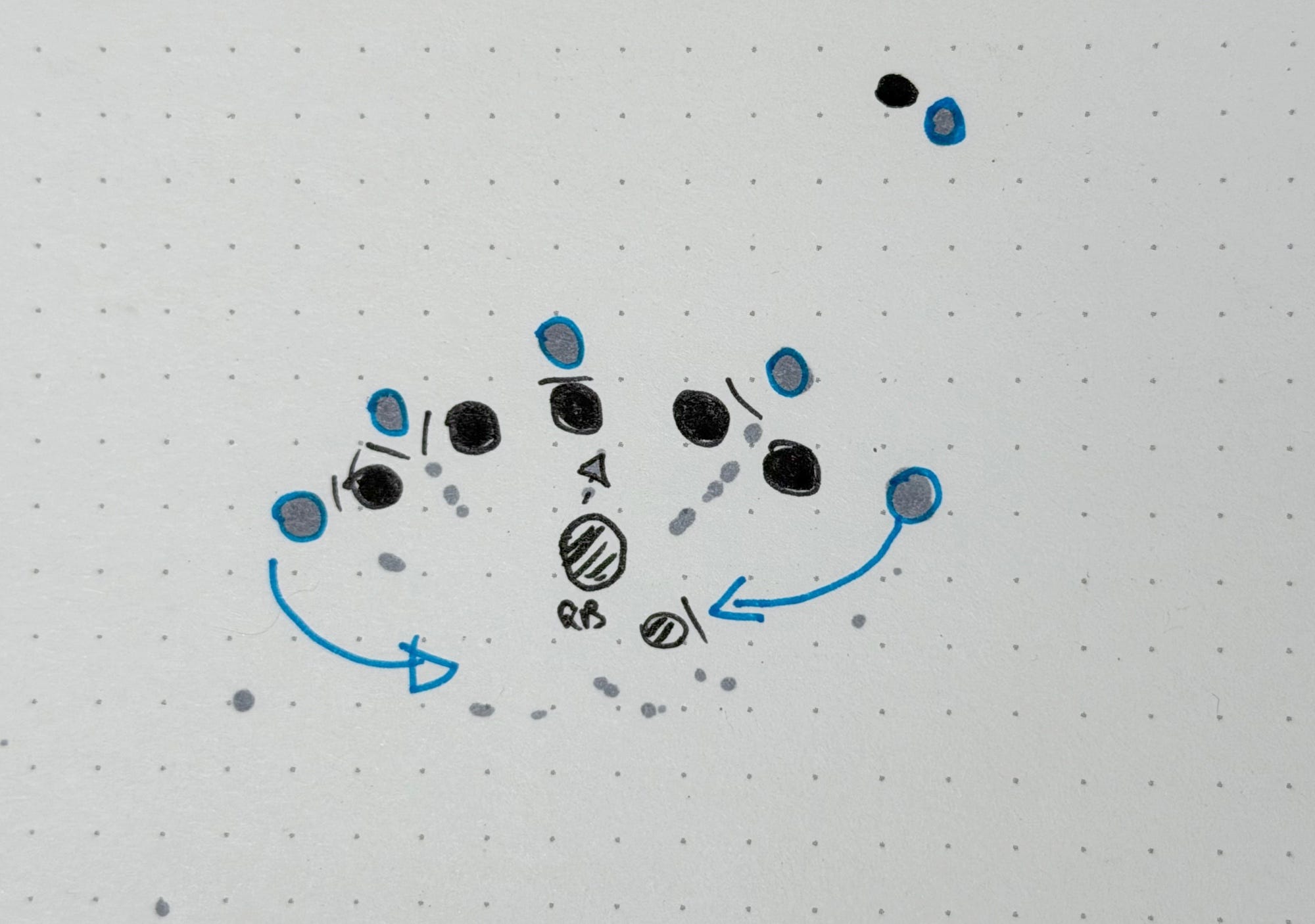
This is where Climbing the Pocket comes in. Instead of running away from pressure, quarterbacks are taught to step up into the pocket towards the line to have more time to assess the situation and make a play. The quarterback buys time not by scrambling and rushing into attempted heroics. Instead, he understands the shape of pressure coming and makes small steps forward to have more time to assess. For people working on software teams, we may not be chased by Defensive Ends and blitzing Linebackers, but we can relate to the various levels of pressure in our craft.
From the conversations with friends, colleagues, and peers in the industry, there are few companies that are feeling the pressure of the market and the chaos of making sense of AI. Let’s look at the tech equivalent of climbing the pocket of pressure.
Like the quarterback being rushed, many of us working in tech right now feel blitzed from every direction. This was true before, but now with the tech incursion occurring, we feel it every way, and it’s challenging to know which one will hit us.
The first form of pressure we’re all feeling is competitors shipping things on your roadmap. This is no surprise as in sense-making phase of AI, everyone is building the same thing. The external news is a lot of pressure applied to every company at the moment. This feels like the biggest blitz at the moment.
The second form is doing more with less. Teams are flatter, budgets are tighter, and the roles that used to absorb the overflow — the extra researcher, the second PM, the contract designer — are gone. What’s left is the same ambition carried by fewer people, and the expectation that AI closes the gap. This one doesn’t come off the edge. It comes straight up the middle, from inside your own line. That distinction matters, because the instinct to push harder makes it worse: when the pressure is internal, speed collapses the pocket rather than escaping it.
Finally, there is the constant shift in priorities. The roadmap you aligned on in January is unrecognizable by April, not because anyone was wrong but because the ground underneath the plan keeps moving. New leadership arrives with a new thesis. A model release changes what’s possible overnight. The strategy doc gets rewritten faster than anything gets built. This pressure doesn’t attack from a fixed angle — it loops, and the spot you set up to defend isn’t where it arrives. The failure here isn’t getting hit. It’s standing still, waiting for the priorities to settle before you commit to anything, and running out the clock.
In a world where many of our career experience is now a .md file, this is the time where the old plays may not work. You want to avoid the drift, which is when there is movement but not progress. When feeling high pressure in work conditions, there is a tendency to revert to the safe zones. This might be waiting for the next meeting, finding reasons for why things haven’t happened or look at staffing. These are the right considerations at the beginning of the intention of the play, but things are breaking down.
The second common mistake is staring at the pressure instead of the field. The pressure is important to recognize, but if you let your sights off the goal and progress you need to make, all your attention will be focused on the rush, which likely will result in the loss instead of trying to problem solve.
“Calm is smooth.” Experienced people in tech have seen this type of pressure before in different forms. They recognize the sounds and sentiments of pressure approaching you directly. Like the rushed quarterback, you take the same approach.
First, you take a breath and assess the situation. Understand what type of pressure this is before you make this move. There’s a different approach to pressure you feel to be aware of versus a direct hit. Before you over-react, get specific about what is coming:
What does this unexpected breakthrough mean to us? Do we have to change course?
Would speed or change help address the problem, or compound it?
Separate the deadline from the anxiety
Take steps to adjust and see if the pressure reduces. This is not the time to burst into heroics and scramble directly into a sack. Most actions under pressure are intentional steps and adjustments:
Cut the next milestone in half and ship the first part; re-access in the next play
Replace an alignment meeting with a customer touchpoint (if you don’t have a customer, ask a fellow team in the company)
“Calm is smooth.” —Charlie Sutton, Chief Design Officer at Atlassian
Finally, when you’re under pressure, defer blame. Being retrospective is the way to continuously improve, but not while you’re addressing the pressure. You don’t want to be the person on a sinking raft saying, “The raft should have been built differently” when your teammates are trying to steer it to shore. Get through the current iteration then be retrospective.
There are so many parallels with football and shipping software in an agile way. In both aspects, the cycle is the atomic unit: the play in football and interaction cycle in software. The game is about a series of iterations and making forward progress. Making rushed decisions under pressure might result in something you didn’t expect.
Keep cool under pressure. Know the end zone at the end of the field is no different than what we’ve done in the past: deliver value to customers.
How we’re evolving Jira for AI-native software development → I’m so excited to be a part of this work; more coming
Atlassian is hiring Senior Design Manager for Jira AI | Details from Charlie Sutton
Congrats to Paper on the Series A fundraise | Hiring Design Engineer and Product Designer
Paper’s playbook: Stephen Haney on building a design tool for the agent era | Designer Founders
Passionfroot raises $15M to expand its B2B creator marketplace to the US